

Curacao Gaming License Guide: Benefits, Costs, Process, and Crypto Support
Table of Contents
- Introduction
- What Is a Gaming License?
- Why Choose Curaçao for Online Gaming?
- What is a Curaçao Gaming License
- Advantages of Holding a Curaçao Gaming License
- Cost of a Curacao Gambling License
- Step-by-Step Application Process
- Ongoing Compliance Requirements for Curaçao Gaming Operators
- Cryptocurrency Support Under a Curaçao License
- Conclusion
- Why Choose Tecpinion
- FAQs
Introduction
For operators, obtaining a license involves more than submitting an application. Businesses must meet requirements related to company structure, ownership, compliance, responsible gaming, player protection, technical systems, and ongoing reporting.
This guide explains the Curaçao gaming license process, requirements, costs, benefits, compliance obligations, and cryptocurrency considerations for online gaming operators.
Current market Stats
The global casino gambling market is projected to reach approximately $230.35 billion by 2029, growing at a CAGR of 7.4%, according to The Business Research Company.
What Is a Gaming License?
A gaming license is regulatory authorization that allows a business to offer gambling activities within the scope permitted by a licensing jurisdiction. Depending on the regulator, licensing may cover online casinos, sports betting, poker, lotteries, gaming software, or other gambling-related services.
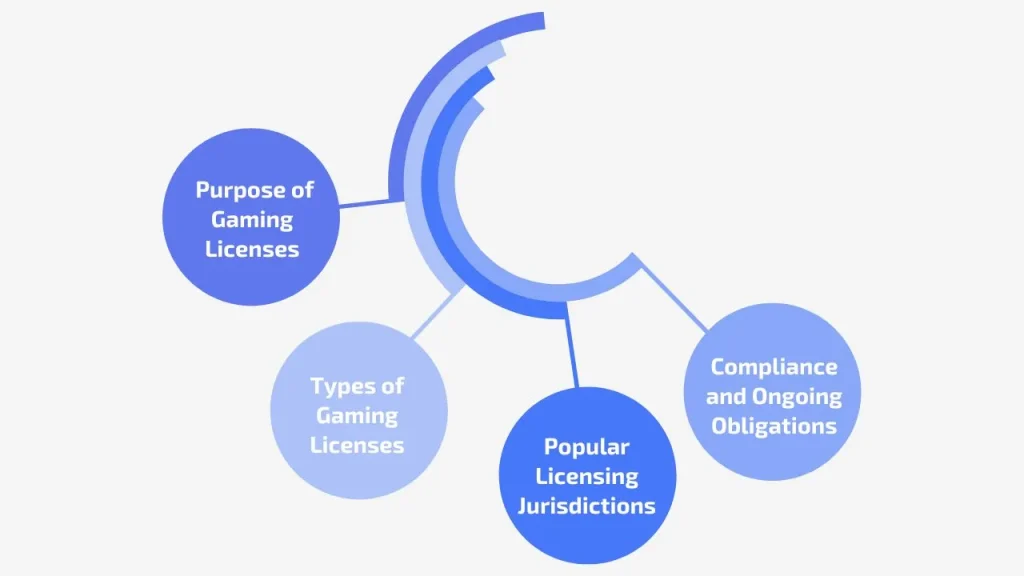
1. Purpose of Gaming Licenses
Gaming licenses serve several key purposes:
- Legitimacy: They give businesses the legal right to operate in certain areas.
- Player Protection: Licenses make sure that users are safe by following the rules. These rules maintain fair play, data protection, and a method for resolving conflicts.
- Compliance: When it comes to cybersecurity, anti-money laundering (AML), and responsible gaming, operators must follow strict rules.
- Market Access: Many countries only allow licensed operators to offer services to their residents.
2. Types of Gaming Licenses
Different places have different licensing systems, but most of them fall into one of these groups:
- Remote (Online) Gaming Licenses: For companies offering games over the internet.
- Software Provider Licenses: For companies that develop and supply gaming software.
- Betting Licenses: Specific to sports and event wagering.
- Casino Licenses: Cover a range of games like slots, roulette, blackjack, etc.
Licensing categories vary by jurisdiction. Some regulators issue separate licenses for different gambling activities, while others provide broader licenses covering multiple verticals.
3. Popular Licensing Jurisdictions
Several well-known regulatory bodies issue online gaming licenses, including:
- Malta Gaming Authority (MGA) – Malta
- UK Gambling Commission (UKGC) – United Kingdom
- Curaçao Gaming Authority (CGA) – Curaçao
- Gibraltar Regulatory Authority – Gibraltar
- Isle of Man Gambling Supervision Commission – Isle of Man
- Kahnawake Gaming Commission – Canada
Each regulatory body has unique guidelines to be followed. This creates different challenges for operators.
4. Compliance and Ongoing Obligations
Each regulator has different rules, fees, and benefits, which affect where operators decide to set up their business.
- Regular audits
- Financial reporting
- Ongoing background checks
- Technical testing of gaming systems
The exact obligations depend on the jurisdiction and license type. Operators should therefore verify requirements directly with the relevant regulator before applying.
Why Choose Curaçao for Online Gaming?
Curaçao has become one of the most recognised jurisdictions in the world for online gaming and gambling operations. Its popularity stems from a combination of historical development, favourable legal conditions, global accessibility, and an efficient licensing process.
1. Curaçao’s Online Gaming Regulatory Framework:
Curaçao has a long-standing history in the online gaming industry. However, its regulatory framework has undergone significant changes in recent years.
-
Early Regulation:
Curaçao became an established jurisdiction for online gaming during the 1990s, developing a regulatory framework that attracted international gaming operators.
-
Current LOK Framework:
The National Ordinance on Games of Chance (LOK) came into effect on December 24, 2024. Under this framework, the Curaçao Gaming Authority (CGA) is responsible for licensing and supervising the online gaming sector.
-
Direct Licensing:
The current framework allows operators to apply directly through the CGA for an online gaming license. It also provides a separate supplier licensing route for eligible businesses providing gambling-related critical services and goods.
-
Regulatory Transition:
The previous master-license and sub-license system has been replaced by the LOK framework. The former Orange Seal and sub-license arrangement ended in October 2025 as Curaçao transitioned to its current licensing system.
-
Digital Licensing Infrastructure:
The CGA operates an online portal through which applicants submit gaming and supplier license applications and manage licensing-related information.
2. Global Reputation and Accessibility:
Curaçao has maintained a global presence in the online gaming industry due to several factors:
Reputation -
-
Well-Known Among Operators:
Curaçao licenses are recognized globally, especially popular among startups and mid-sized operators. It is often the first choice for those operators entering the iGaming market.
-
Legal and Regulatory Framework:
The jurisdiction offers a flexible and regulatory approach to online gaming. Operators can benefit from relatively low taxes, which makes the location attractive for starting an online casino. This has helped it maintain a steady flow of license applicants.
-
Reliability:
Although some critics point to less stringent compliance requirements, especially compared with stricter regulators (like the UKGC or MGA). However, Curaçao still rates among the best jurisdictions for online casino licenses, offering reliable legal protection and legitimacy for many online gaming businesses.
Accessibility -
-
Low Barriers to Entry:
People are interested in Curaçao because the licensing process is cheaper and faster than in other controlled places. The standards are simple, making it easier for smaller operators to comply with.
-
International Scope:
A Curaçao online casino license allows operators to offer services to players in many countries worldwide (with some exceptions), making it a globally accessible choice.
-
Tax Advantages:
Curaçao offers a favorable tax regime with low corporate taxes and no VAT on services exported outside the island, which is ideal for global operators.
Curaçao’s appeal as a Gaming hub comes from its early adoption of regulations, flexible licensing, cost-effectiveness, and global reach. While it may not be the strictest regulator, its pragmatic, business-friendly approach attracts operators—particularly newcomers and those aiming for international markets.
What is a Curaçao Gaming License
Curaçao is one of the oldest and most accessible jurisdictions for online gambling licensing. It offers a straightforward licensing model aimed at attracting iGaming operators from around the world, particularly startups and mid-tier companies. Below is an overview of the licenses and the operational scope they provide.

1. Types of Curaçao Gaming Licenses:
Under the current LOK framework, the Curaçao Gaming Authority provides licensing routes for businesses involved in online gaming and certain gambling-related supplier activities.
B2C Online Gaming License A B2C license is for operators offering games of chance directly to players. The CGA’s licensing framework covers remote gaming offered in or from Curaçao.
B2B Supplier License A supplier license applies to eligible businesses providing gambling-related critical services and goods, including certain game suppliers, sportsbook software suppliers, peer-to-peer software suppliers, and live studio game suppliers established in Curaçao
| License Type | Primary Purpose |
| B2C Online Gaming License | Offering online games of chance directly to players |
| B2B Supplier License | Providing qualifying gambling-related services and goods to operators |
2. Scope of Activities Under a Curaçao Gaming License:
A Curaçao gaming license is relatively broad and flexible, making it appealing for a wide range of gambling activities.
Permitted Activities:
- All forms of interactive gaming over the internet.
- Includes RNG-based games, live dealer games, and games of skill.
- Operators can offer multiple verticals under one license, unlike in jurisdictions where each product type requires a separate license.
Global Reach:
- Curaçao does not restrict license holders from operating only within specific countries.
- Operators can target international markets, except for restricted jurisdictions such as:
- The USA
- The Netherlands (unless specially permitted)
- France
- UK (without a local license)
- Other jurisdictions that require local licenses
Hosting and Corporate Requirements:
- Servers must be hosted in Curaçao or an approved jurisdiction.
- A local presence is typically required, including:
- A Curaçao-registered company
- Local representative/authorized person
- Compliance with AML/KYC standards
Would You Like To Explore More About Sweepstakes Casino?
Advantages of Holding a Curaçao Gaming License
Curaçao is a popular place for iGaming licenses because it is affordable, quick to set up, and allows operators to run many types of gambling businesses.
-
Cost-effectiveness:
A key advantage of a Curaçao gaming license is its relatively accessible cost structure compared with some more highly regulated licensing jurisdictions. However, the total cost depends on the license type, application requirements, company setup, compliance, and ongoing operational expenses.
1. Licensing fees are significantly lower, making it ideal for startups with limited budgets.
2. Ongoing operational costs, including maintenance, compliance, and taxation, are relatively low.
3. Curaçao offers a favorable tax regime, including low corporate tax rates and no VAT on services exported internationally.
Companies can spend more on marketing, platform growth, and getting new customers because they don't have to pay as much. -
Fast Approval Process:
Curaçao offers one of the quickest pathways to entering the online gambling market.
1. The licensing process can typically be completed within a few weeks, provided all documentation is in order.
2. Minimal bureaucratic hurdles and a straightforward application process accelerate the timeline from application to operation.
3. The absence of a need for separate licenses for different types of games speeds up approval.
This fast-track system allows businesses to launch quickly and respond rapidly to market opportunities. -
Global Recognition:
While not as strict as regulators in Europe, the Curaçao license is widely recognised and accepted in many international markets.
1. The license has been in operation since 1996, giving it a long-standing reputation in the iGaming space.
2. Many payment providers, software developers, and affiliates accept Curaçao-licensed operators.
3. Although it does not grant access to highly regulated markets like the UK or the USA, it is suitable for large parts of Latin America, Asia, Eastern Europe, and Africa.
This global reach makes it a practical choice for companies targeting emerging or diverse markets. -
Flexibility for Startups and Established Operators:
The Curaçao license is designed to support businesses of all sizes with minimal restrictions.
1. One license covers multiple types of gaming activities, including casino, sports betting, poker, and more.
2. Startups benefit from low entry barriers and reduced administrative overhead.
3. Established operators value the license for its operational flexibility and ability to scale into multiple verticals under a single regulatory framework.
This flexibility allows operators to test, grow, and diversify their offerings without needing multiple licenses or jurisdictions.
Many online gambling companies still choose the Curaçao gaming license because it is cheap, easy to get, accepted all over the world, and gives them a lot of operating freedom. Curaçao has a practical and efficient licensing option for both new businesses that want to get up and running quickly and well-known brands that want to expand around the world.
Cost of a Curacao Gambling License:
Curaçao is one of the most affordable iGaming jurisdictions, but operators should know the costs involved, including setup fees, ongoing charges, and any extra or hidden expenses.
Initial Setup Costs:
Setting up a Curaçao-licensed iGaming operation involves several foundational expenses:
- Company Incorporation: To apply for a license, operators must establish a legal entity registered in Curaçao. This involves corporate setup services, legal documentation, and government filings.
- License Application: There is a one-time fee for applying for the license through a master license holder. This covers the administrative and regulatory processing involved.
- Technical Infrastructure: Operators must also secure compliant hosting, gaming servers, and IT infrastructure, which must be based in Curaçao or another approved jurisdiction.
- KYC/AML Setup: Initial compliance systems and protocols must be implemented to meet Know Your Customer and Anti-Money Laundering standards.
Ongoing Fees and Renewals:
After getting a license, operators must pay ongoing fees and follow regulatory requirements.
- Annual License Renewal: The license must be renewed each year, with a renewal fee paid to the master license holder or service provider.
- Monthly Service Fees: Many master license holders charge a monthly fee that includes ongoing support, server maintenance, DNS management, and compliance assistance.
- Tax and Reporting Obligations: Curaçao offers a favorable tax regime, but operators must still meet reporting requirements and maintain accounting services to stay compliant.
- Corporate Maintenance: This includes business address services, nominee directors, accounting, and legal compliance support to maintain the Curaçao company.
Hidden or Additional Costs to Consider:
Although the Curaçao license is generally affordable, some costs may not be immediately obvious:
- Payment Processing Integration: Setting up secure payment gateways or working with PSPs (Payment Service Providers) may involve integration fees and minimum deposit requirements.
- Software Licensing: If the operator does not develop its own platform, there may be additional charges for third-party gaming software or white-label solutions.
- Compliance Audits or Updates: While not mandatory in the same way as in highly regulated jurisdictions, periodic updates to compliance protocols may require legal or consultancy services.
- Legal Restrictions and Geo-Blocking: Operators must implement geo-blocking tools and legal consultations to ensure that they are not serving restricted markets, which may involve extra cost and technical setup.
Step-by-Step Application Process
Here’s a detailed, up‑to‑step guide to obtaining a Curaçao gaming (iGaming) licence under the current regulatory framework (LOK / CGA), including required documentation and due diligence procedures. If you like, I can also give a checklist customised for Indian operators.
Below is the usual sequence of steps to secure a licence:
Pre-planning / Scoping
Define your business model (casino, sportsbook, lottery, etc.), target markets, payment methods, and software providers. Decide whether you need a B2C or a B2B licence. Estimate budget (application & annual fees, compliance, infrastructure, audits).
Incorporate a Curaçao Legal Entity
You must form a company under Curaçao law (often as a B.V. or N.V.). Appoint at least one local managing director/resident representative. Acquire a registered/local office. Register with the Chamber of Commerce.
Establish Substance / Local Presence
The law requires real presence: local director(s), perhaps some staff, and infrastructure (including at least one server hosted in Curaçao for B2C), depending on licence type.
Prepare Required Documentation
Gather the documents listed in detail below (corporate, personal, technical, policy, etc.). Ensure they are up‑to‑date, notarised/certified where required, and translated if needed.
Develop Key Policies / Systems
Include anti‐money laundering (AML) & counter‑financing of terrorism (CFT) policies, Know Your Customer (KYC) policy, responsible gaming policy, fraud prevention, player protection, and data privacy policy. Also set up technical systems: server architecture, security, certified RNG, auditing, etc.
Complete “Fit & Proper” Checks / Due Diligence
For all Ultimate Beneficial Owners (UBOs), directors, and key officers: verify identity, criminal record (police clearance), source of wealth/funds, possibly financial references. Also check against sanctions lists.
Submit Application & Pay Fees
Use the CGA online portal. Submit all forms, documents, business plan, and technical details. Pay the application fee + due diligence fees. For B2C and B2B, the amounts differ.
Technical Audit / Review
The regulator will examine your platform: software, RNG, security, server setup, hosting, game fairness, backups, etc. They may request further test reports from independent labs.
Regulatory Interviews / Queries
Be ready to answer questions from the CGA. They may want clarifications about policies, ownership, financial forecasts, player protection, and risk controls.
Licence Grant / Go-Live / Post-Approval Activities
Once approved and fees paid, the licence is issued. Before going live, you may need to set up payment processing, ensure full compliance, and perform a soft launch. Then full operation. After the licence, maintain ongoing compliance, audits, reporting, and renew annually.

Ongoing Compliance Requirements for Curaçao Gaming Operators
1. Regulatory Reporting and Record-Keeping
Licensed operators are required to maintain accurate records and provide reports to the Curaçao Gaming Authority (CGA) as required. These obligations can include:
- Financial reporting: Submit required financial information and annual financial statements within the prescribed deadlines.
- Transaction reporting: Maintain records of player transactions and gaming-account activity.
- Incident reporting: Report significant security breaches, technical failures, fraud, or other serious incidents to the CGA within the required timeframe.
- Operational updates: Report relevant changes to the operator’s operations and regulatory documentation.
- Record retention: Keep sufficient records to demonstrate compliance and respond to regulatory requests.
2. Responsible Gaming
Responsible gaming is a key part of ongoing compliance. Curaçao’s current responsible gaming requirements include measures designed to help players make informed decisions and reduce gambling-related harm.
Operators should provide:
- Age verification to prevent underage gambling.
- Clear responsible gaming information that players can easily access.
- Self-assessment tools to help players evaluate their gambling behaviour.
- Behaviour monitoring to identify potential signs of problematic gambling.
- Cooling-off periods that allow players to temporarily stop gambling.
- Self-exclusion tools for players who want to restrict their access.
- Deposit limits and other applicable player-control measures.
- Responsible gaming training for relevant employees.
3. AML/KYC and Player Protection
Operators must maintain procedures designed to prevent money laundering, terrorist financing, fraud, and other financial crime risks.
Key measures include:
- Know Your Customer (KYC) procedures for player identification and verification.
- AML controls based on the operator’s risk profile.
- Monitoring of player transactions and activity for suspicious behaviour.
- Source-of-funds or source-of-wealth checks where required.
- Sanctions and risk screening where applicable.
- Suspicious activity reporting in accordance with applicable requirements.
4. Technical and Operational Compliance
Operators must also maintain systems that support secure, reliable, and transparent gaming operations. This can include:
- Maintaining secure gaming platforms and technical infrastructure.
- Ensuring games and gaming systems meet applicable certification requirements.
- Protecting player and transaction data.
- Maintaining appropriate security and business-continuity measures.
- Monitoring third-party gaming and technology providers.
- Reporting material technical or security incidents to the regulator when required.
But what casinos that use cryptocurrency: Can crypto casinos operate with a Curacao license? Let’s find out.
Cryptocurrency Support Under a Curaçao License
How Cryptocurrency Works Under a Curaçao License
- Crypto payments: Operators can accept crypto currencies or stablecoins as deposits and withdraw as long as they are permitted.
- Player identification and verification: Cryptos should be associated with suitable player identification, verification, and anti-money laundering controls.
- Transaction monitoring: Operators should monitor crypto transactions for unusual or potentially suspicious activity.
- Payment providers: Crypto payment providers may have additional compliance, technical, and transaction requirements.
- Market restrictions: A Curaçao license does not automatically make cryptocurrency gambling software legal in every country. Operators must follow the laws of each target market.
Benefits of Cryptocurrency for Online Casinos
- Faster transactions: Supported blockchain networks can allow quicker deposits and withdrawals.
- International payments: Cryptocurrency can provide an additional payment option for eligible international players.
- Payment flexibility: Operators can offer an alternative to traditional banking methods.
- Stablecoin support: Stablecoins can reduce some of the price volatility associated with other cryptocurrencies.
Challenges of Cryptocurrency Payments
- Price Volatility: Cryptocurrency prices fluctuate significantly.
- Regulatory changes: Regulations governing digital assets and gambling may vary from one jurisdiction to another.
- Payment risks: Operators must have appropriate systems to address wallet screening, transaction verification, and payment security.
- Restrictions in the market: Despite the operator having a license from Curaçao, the gambling activities of cryptocurrencies can be restricted or banned in some countries.
Conclusion
Is a Curaçao gaming license suitable for long-term growth? A Curaçao license is a good way to start expanding internationally, but for long-term growth, companies usually need to get more licenses in Tier 1 jurisdictions to boost their reputation, make sure they follow the rules more closely, and get into highly regulated markets.
Careful planning, legal guidance and robust compliance practices are essential for operators leveraging Curaçao as a foundation for sustainable global growth.
Why Choose Tecpinion
These platforms come with advanced features like AI-powered analytics, crypto payment solutions, and responsible gaming tools that keep your business safe, in line with the law, and ready for the future.
Our team supports you at every stage, from licensing guidance and quick deployment through turnkey or white-label solutions to long-term scalability, ongoing support, and global expansion strategies. With Tecpinion as your technology partner, you gain not just software but a reliable foundation for sustainable growth in the competitive iGaming market.
FAQs
- What is a Curaçao gaming license?
A Curaçao gaming license is a license issued by the regulatory authority, enabling a gaming company to conduct online gaming activities in accordance with the gaming laws and regulations of the state of Curaçao. The existing system is governed by the Curaçao Gaming Authority (CGA).
- What makes Curaçao an attractive destination for online gaming companies?
International gaming operators may find Curaçao appealing due to its user-friendly regulatory environment, international orientation, and somewhat flexible operating environment. But operators are still required to adhere to the requirements of each country in which they provide their services.
- How much does a Curaçao gaming license cost?
The total cost depends on the type of licence, structure of the business, application needs, compliance configuration, and running costs. Company formation, legal, technical, compliance, and maintenance costs should be taken into account in addition to licensing fees.
- How to apply for a Curaçao gaming license?
The application process involves defining the business model, establishing the required corporate structure, preparing ownership and compliance documentation, completing due diligence, submitting the application, and meeting the regulator's technical and operational requirements.
- What does a Curaçao gaming operator need to do in order to stay compliant?
Operators are responsible for keeping the following regulatory reporting, AML/KYC procedures, responsible gaming measures, player protection controls, technical standards and record-keeping appropriate. Specific obligations will vary according to regulation and licence.
- Can a Curaçao gaming license be used worldwide?
No. A gaming license for the island of Curaçao is not sufficient to license the same operator to play in all countries. Operators are required to evaluate the different gambling regulations in their area and seek further licences if necessary.