

The UKGC Gambling License is one of the most respected and widely recognized gambling licenses in the world. Issued by the United Kingdom Gambling Commission (UKGC), it authorizes both B2C and B2B gambling operators—including casino platforms, sportsbook providers, and gaming software suppliers—to legally offer gambling services to players in the UK.
UKGC Gaming License Explained: Costs, Advantages, Application Steps & Crypto Acceptance
Table of Contents
- Introduction to the UKGC Gaming License
- What Is the UK Gambling Commission (UKGC)?
- Why the UKGC License Matters in the Gambling Industry
- Types of UKGC Gaming Licenses
- Who Needs a UKGC Gaming License?
- UKGC Gaming License Costs
- Key Requirements for UKGC Licensing
- Step-by-Step UKGC License Application Process
- Advantages of Holding a UKGC Gaming License
- UKGC License Compliance & Ongoing Obligations
- Crypto & Digital Payments Under UKGC Regulation
- Common Challenges & Mistakes in UKGC Licensing
- Alternatives to the UKGC License
- Is the UKGC Gaming License Right for Your Business?
- Final Thoughts
- FAQs
Introduction to the UKGC Gaming License
Known for its strict standards around fair gambling, player protection, anti-money laundering, and operational transparency, the UKGC license is widely regarded as the gold standard for trust and credibility across the global B2B gambling and iGaming industry. But what makes the UKGC Gambling License so important for B2B and B2C gambling businesses? In this guide, we’ll walk you through the essentials of the UKGC Gambling License, explaining what the UK Gambling Commission is, how it regulates B2B and B2C gambling businesses, and why holding a UKGC license is critical for gambling operators and gaming service providers.
Whether you’re a B2B gambling platform provider, operator, investor, or simply seeking a clearer understanding of UK gambling regulations, this guide offers a practical and easy-to-understand overview.
DID YOU KNOW?
The casino gambling market has experienced significant growth in recent years. It will grow approx $230.35 billion in 2029 at a compound annual growth rate (CAGR) of 7.4%.
What is the UK Gambling Commission (UKGC)?
Its key responsibilities include:
- Licensing gambling operators and key personnel
- Regulating online and land-based gambling activities
- Ensuring gambling is conducted fairly and transparently
- Preventing crime, fraud, and money laundering in the gambling sector
- Protecting vulnerable players, including minors and those at risk of gambling-related harm
Why the UKGC License Matters in the Gambling Industry
- Player Confidence: Players trust licensed operators to safeguard their funds and personal data
- Fair Gaming Environment: All games must meet strict testing and fairness requirements
- Responsible Gambling Measures: Tools that are required include player protection controls, deposit caps, and self-exclusion plans.
- Access to the UK Market: Enables legal operation in one of the world’s largest regulated gambling markets
- Enhanced Business Credibility: Strengthens relationships with banks, payment providers, affiliates, and partners
Types of UKGC Gaming Licenses
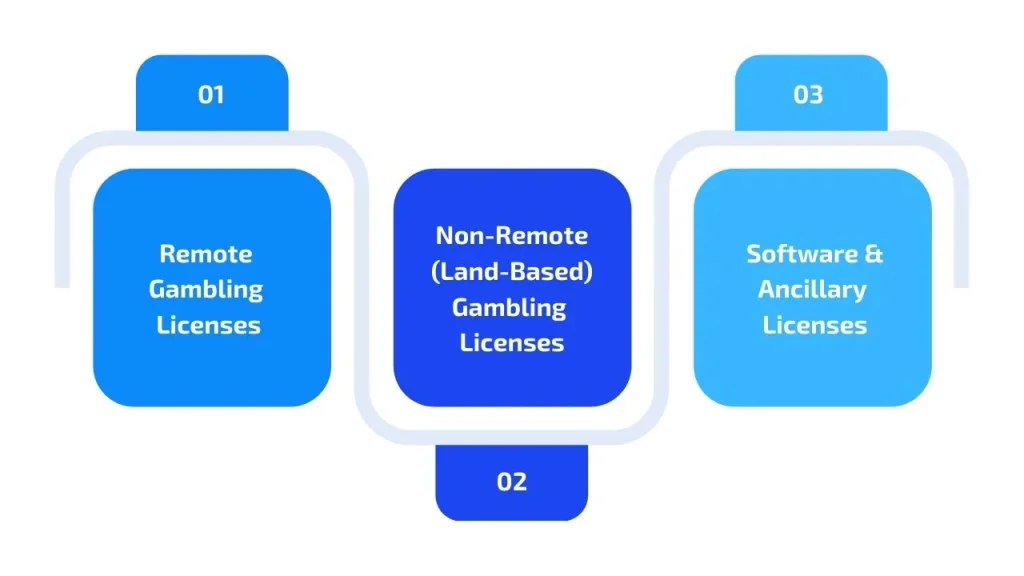
The UK Gambling Commission provides a variety of types of licences that are based on the way in which businesses provide gambling services. The licenses fall under 3 categories, namely remote, non-remote (land-based), and ancillary or supporting licences. Having an understanding of these classifications is crucial for operators to make an appropriate application and maintain compliance with the UK regulations.
-
Remote Gambling Licenses:
Remote gambling licenses are required for operators that offer gambling services online or through other remote means such as mobile apps, websites, or telephone betting.
These licenses cover activities including:
1. Online casinos
2. Sports betting and bookmakers
3. Bingo and lottery games
4. Peer-to-peer betting and gaming
Remote licenses are further classified based on the type of gambling activity, such as:
1. Remote Casino Operating License
2. Remote Betting Operating License
3. Remote Bingo Operating License
As remote gambling can be accessible to mass-market consumers, the UKGC enforces stringent rules and regulations – for example, player ID verification, anti-money laundering (AML) protocols, data protection, and responsible gambling features. -
Non-Remote (Land-Based) Gambling Licenses:
Non-remote gambling licenses apply to physical, land-based gambling venues operating within Great Britain. These licenses are required for establishments such as:
1. Casinos
2. Betting shops
3. Bingo halls
4. Arcades and gaming centers
Non-remote licenses are often issued alongside premises licenses, which are granted by local authorities. Operators must comply with regulations covering:
1. On-site player protection
2. Fair gaming practices
3. Staff training and supervision
4. Physical security and cash handling
Land-based operators are also subject to inspections and must ensure their premises meet UKGC standards. -
Software & Ancillary Licenses:
Besides operator licenses, the UKGC also requires licenses for some businesses and individuals who support or supply gambling services.
Software Licenses: Companies that design, provide, or maintain gambling software that is used by UKGC-licensed operators need a gambling software license. This includes:
1. Game developers
2. Platform and system providers
3. Random Number Generator (RNG) software suppliers
These license holders must ensure their software is secure, fair, and compliant with UKGC technical standards.
Ancillary Licenses: Ancillary licenses apply to individuals in key roles within gambling businesses, such as:
1. Directors and senior managers
2. Compliance and finance officers
3. Key operational staff
These licenses ensure that individuals in positions of responsibility are fit and proper and meet the UKGC’s integrity and competency requirements.

Who Needs a UKGC Gaming License?
1. Operators:
The main organizations needed to obtain a UKGC license are gambling operators. This applies to companies that sell gambling goods directly to customers.
Operators who need a license include:
- Online casinos and betting platforms
- Sports betting and bookmaking companies
- Bingo and lottery operators
- Land-based gambling venues such as casinos, betting shops, and bingo halls
Operators are responsible for:
- Ensuring fair and transparent gambling
- Protecting players and vulnerable individuals
- Implementing responsible gambling tools
- Complying with anti-money laundering (AML) and data protection regulations
2. Software Providers:
It may also be necessary for software developers, suppliers, or maintainers of gambling software used by UKGC-licensed operators to possess a UKGC Gambling Software License. This applies to companies that provide:
- Casino games and live dealer software
- Sports betting platforms and risk management systems
- Random Number Generator (RNG) software
- Player account management and backend systems
3. White-Label & B2B Businesses:
White-label and B2B (business-to-business) providers often play a behind-the-scenes role but may still require UKGC licensing, depending on their level of control and involvement.
These businesses include:
- White-label casino or sportsbook providers
- Platform and hosting service providers
- Payment, risk, and compliance solution providers
In white-label arrangements, the UKGC closely examines:
- Who controls player funds
- Who manages customer data
- Who is responsible for compliance and marketing
Even if a company does not interact directly with players, it may still need a license or be subject to UKGC oversight if it materially influences gambling operations.
UKGC Gaming License Costs
Obtaining and maintaining a UKGC gaming license involves several cost components. These costs go beyond the initial application fee and include ongoing regulatory, compliance, and operational expenses. Understanding the full cost structure helps businesses plan realistically before entering the UK gambling market.
-
Application Fees:
Application fees are paid when submitting a license application to the UK Gambling Commission. These fees are non-refundable and depend on factors such as:
1. Type of license (remote, non-remote, or software)
2. Nature of gambling activities offered
3. Expected annual gross gambling yield (GGY)
Remote gambling licenses typically carry higher application fees due to increased regulatory oversight. The UKGC uses these fees to cover the cost of assessing the applicant’s suitability, business model, ownership structure, and compliance readiness. -
Annual License Fees:
Once a license is granted, operators must pay annual license fees to keep it active. These fees are recurring and are usually calculated based on:
1. The operator’s annual gross gambling yield
2. The type and number of licensed activities
3. Whether the business operates remotely or land-based
Annual fees increase as revenue grows, meaning larger operators pay higher fees. Failure to pay annual fees on time can result in penalties or suspension of the license. -
Additional Compliance & Operational Costs:
In addition to the formal UKGC fees, licence holders have to set aside money for continuing operational and compliance costs, which are a big element of doing business in the UK. These may include:
1. Anti-money laundering (AML) systems and monitoring tools
2. Responsible gambling measures and player protection technology
3. Game testing and certification
4. Legal and regulatory advisory services
5. Staff training and compliance personnel
6. Reporting, auditing, and record-keeping systems
The UKGC places strong emphasis on continuous compliance, meaning these costs are not optional and must be factored into long-term business planning.

Key Requirements for UKGC Licensing
Company Structure & Ownership Transparency:
The UKGC demands complete openness about the ownership and legal structure of a business. Applicants must disclose:
- Corporate structure and registered entities
- Ultimate beneficial owners (UBOs)
- Directors, shareholders, and key decision-makers
- Source of funds and source of wealth
AML & KYC Obligations:
Strong Anti-Money Laundering (AML) and Know Your Customer (KYC) controls are a core requirement of UKGC licensing. Operators must implement:
- Customer identity verification procedures
- Ongoing customer due diligence and risk profiling
- Transaction monitoring and reporting
- Policies to detect and prevent money laundering and terrorist financing
Responsible Gambling Measures:
Protecting players from gambling-related harm is a central focus of the UKGC. Licensed operators must provide:
- Self-exclusion options, including participation in national schemes
- Deposit, loss, and session limits
- Reality checks and clear account information
- Tools to identify and support at-risk players
Technical & Security Standards:
The UKGC enforces strict technical and security requirements to ensure fair and safe gambling environments. These standards include:
- Independent testing and certification of games and RNGs
- Secure handling of player data and funds
- Robust IT security and fraud prevention systems
- Compliance with data protection regulations
Step-by-Step UKGC License Application Process
Below is a simple step-by-step overview.
Get Ready
Before
Applying
Prepare
Required
Documents
Submit
Application &
Review
Background
Checks
Approval Time
1. Get Ready Before Applying:
Before submitting an application, businesses should:
- Decide which gambling activities need to be licensed
- Set up a compliant company and ownership structure
- Appoint key staff, including compliance and AML officers
- Create responsible gambling, AML, and KYC policies
- Ensure gaming systems meet UKGC standards
2. Prepare Required Documents:
The UKGC will ask for several documents, including:
- Company and ownership details
- ID documents for directors and key staff
- Business plan and financial records
- AML, KYC, and responsible gambling policies
- Technical system and security details
- Proof of the source of funds and wealth
3. Submit Application & Review:
Applications are submitted online through the UKGC portal. The UKGC will:
- Check if the application is complete
- Review compliance and operations
- Ask for more information if needed
4. Background Checks:
The UKGC carries out checks on the business and its key people, including:
- Criminal and integrity checks
- Financial background checks
- Review of past regulatory history
- Assessment of management experience
5. Approval Time:
Approval time depends on how complex the application is. In general:
- Simple applications take a few months
- Complex applications take longer
- Missing documents can cause delays
Want to Know more About UKGC Gaming License?
Advantages of Holding a UKGC Gaming License
-
Market Access & Player Trust:
A UKGC license allows operators to legally operate in one of the world’s largest regulated gambling markets. It also builds strong player confidence, as customers know their funds, data, and rights are protected under strict UK regulations—driving higher retention and long-term loyalty.
-
Regulatory Reputation & Credibility:
The UKGC license is a globally respected symbol of trust and professionalism. It shows that an operator meets high standards for fairness, transparency, and responsible gambling, helping attract partners, investors, and affiliates while strengthening overall brand reputation.
-
Partnerships with Banks & Payment Providers:
That banks and payment providers fully trust UKGC-licensed operators facilitates access to reliable financial services, secure payment options, and long-term partnerships, all of which contribute to smooth, secure, and fully compliant business operations.
UKGC License Compliance & Ongoing Obligations
1. Reporting & Audits:
UKGC licensees are required to provide regular reports to the Commission. These reports may include:
- Financial statements and gross gambling yield
- Transaction and player activity reports
- Anti-money laundering (AML) and responsible gambling compliance data
2. Player Protection Rules:
For all UKGC licensees, protecting players is a primary duty. Operators need to put strong steps in place to:
- Promote responsible gambling, including deposit limits and self-exclusion tools
- Verify the identity and age of all customers
- Monitor player behavior for signs of problem gambling
- Ensure games are fair and transparent, with independently tested software
3. Penalties for Non-Compliance:
Failure to comply with UKGC regulations can lead to serious consequences, including:
- Financial penalties or fines
- Suspension or temporary revocation of the license
- Permanent revocation of the license for repeated or serious breaches
- Legal action or restrictions on marketing and operations
Crypto & Digital Payments Under UKGC Regulation
Does the UKGC Allow Cryptocurrency Gambling?
The UKGC does not currently allow operators to accept cryptocurrency as a direct form of gambling payment. All funds must be converted into traditional fiat currency before being used in UKGC-regulated gambling.
Accepted Cryptocurrencies & Payment Methods:
Crypto can’t be used directly for betting, but operators can use regulated payment providers to convert it into GBP or other fiat currencies. Regular payment methods like cards, e-wallets, and bank transfers are still fully supported.
Crypto-Specific AML & Risk Controls:
Operators must apply strict anti-money laundering (AML) and risk monitoring for any digital asset transactions, including verifying sources of funds, monitoring transactions for suspicious activity, and ensuring compliance with UKGC and financial regulations.
Common Challenges & Mistakes in UKGC Licensing
The process of applying for and maintaining a UKGC license is a difficult one, with many operators facing common difficulties that can lead to approval delays or compliance risks.
-
Application Delays:
Crypto will not be able to be wagered directly, but operators will have the ability to utilise payment processors that are regulated and facilitate converting between crypto and GBP or any other fiat. All available payment providers, such as credit cards, e-wallets, and bank transfers, are still fully supported.
-
Compliance Failures:
Violations of ongoing requirements, including anti-money laundering/know-your-customer (AML/KYC) regulations, responsible gambling, and technical standards, could also lead to warnings, fines, or even a licence being revoked. You must maintain a robust internal control function, and you must be audited often.
-
Payment & Banking Issues:
Many operators struggle to secure reliable banking and payment processing without a UKGC license. Even licensed operators must ensure their payment systems comply with UKGC regulations, particularly when handling customer funds or converting digital currencies.
Alternatives to the UKGC License
While the UKGC is one of the strictest and most respected gambling licenses, operators sometimes consider alternative like Curacao gaming license or MGA jurisdictions that offer licensing for different markets, lower costs, or more flexible requirements.
- The Malta Gaming Authority (MGA) license is widely recognized in Europe. It allows operators to target multiple European markets, including EU countries, and is known for high regulatory standards that are slightly less strict than the UKGC.
- The Curacao eGaming license is popular for international and online gambling operators. It is easier and faster to obtain and has lower fees, but it does not provide direct access to regulated markets like the UK or EU. Player protections are also less stringent than UKGC or MGA standards.
Comparison: UKGC vs Other Jurisdictions
| UKGC | Strictest regulations, high trust, access to the UK market, higher costs. |
| MGA | European focus, strong credibility, moderate costs, good for cross-border operations. |
| Curacao | Low cost, fast licensing, suitable for global online markets, but less regulatory credibility. |
Choosing a license depends on the target market, compliance capabilities, and business strategy. Many operators hold multiple licenses to balance credibility, cost, and market access.
Is the UKGC Gaming License Right for Your Business?
Consider the following factors:
-
Target Market:
If most of your audience is in the UK, then you absolutely need a UGKGC license. For those operators targeting international or unregulated markets, different licences (e.g., MGA and Curacao) will suffice.
-
Budget & Resources:
Significant application fees, yearly fees, compliance expenses, and operational investment are required by the UKGC. Smaller startups need to make sure they can afford these expenses.
-
Compliance Capabilities:
Your business must maintain robust AML/KYC systems, responsible gambling measures, and technical security standards to remain compliant.
-
Reputation & Credibility:
A UKGC license enhances trust with players, investors, banks, and payment providers. If brand reputation is a priority, this license is highly beneficial.
-
Long-Term Strategy:
UKGC licensing is best for operators who plan to grow sustainably in regulated markets and are committed to high standards of responsible gambling and transparency.
In short, the UKGC license is ideal for businesses targeting the UK market with the capacity to meet strict regulatory standards, while alternative licenses may be more suitable for operators focusing on global or emerging markets with lower regulatory requirements.
Final Thoughts
For businesses planning to enter the UK gambling market, it’s important to balance the costs and compliance efforts with the growth and credibility a UKGC license offers. This license is best suited for operators committed to high standards and long-term, sustainable operations.
At Tecpinion, we support operators at every stage of the UKGC licensing journey—from application preparation and compliance setup to ongoing risk management. Our expert team helps you avoid common challenges and stay fully compliant with UK regulations. In short, a UKGC license is more than just a legal requirement. It’s a powerful business asset that shows professionalism, trust, and a strong commitment to responsible gambling—helping your business succeed in one of the world’s most regulated and valuable gambling markets.
FAQs
- Is the UKGC license worth it?
For operators targeting the UK market or aiming for top-tier credibility, the UKGC license is highly valuable despite its higher costs and strict regulations.
- Who needs a UKGC gaming license?
A UKGC licence may be necessary for any company or individual who provides, oversees, supplies, or substantially supports gambling services for players in the UK, including platform vendors, software providers, and operators.
- Is a UKGC license required for B2B providers?
Yes. B2B providers such as platform providers, game developers, and payment service companies may need a UKGC license if they support operators serving UK players.
- What are the main benefits of a UKGC license?
The main benefits are access to the UK market, higher player trust, strong global credibility, a better brand image, and easier approval from banks, payment providers, and partners.
- What happens if UKGC rules are not followed?
Non-compliance can lead to heavy fines, license suspension, or permanent revocation, making ongoing compliance critical.