
Online Casino Operator's Guide: How to Promote Responsible Gambling
Table of Contents
Introduction
The modern gambling landscape is evolving. The mindset of the players has drastically changed, as they tend to value a safer and transparent gaming experience. Players are getting aware of the risks involved in gambling, such as addiction, financial loss, and emotional distress.
This has led them to be very selective about their entertainment choices to ensure they safeguard their mental health and finances. Responsible gambling is the foundation of a sustainable and ethical iGaming industry. For operators, it is no longer a mere requirement but rather an effective business strategy or tool that builds trust, loyalty, long-term player retention, and maintains a positive relationship with regulators.
Market Stats
The global market size for online casinos was previously valued at USD 19.11 billion in 2024 and is estimated to grow at a 12.3% CAGR to reach USD 38.00 billion by 2030.
What is Responsible Gambling?
It is a vital policy in gambling software development that ensures players can enjoy online gambling without developing harmful behaviour. Responsible gambling is a framework for implementing systems that monitor player behaviour, offer self-exclusion tools, and manage risks comprehensively to help keep gambling as a recreational hobby.
How is promoting responsible gambling beneficial? Promoting responsible gambling has been beneficial for the entire gambling fraternity, which includes players, operators, regulators, and communities.
- Players have secured a gaming environment for gambling.
- Operators strengthen their brand reputation and ensure regulatory compliance with relevant regulations.
- Regulators can rely on consistent cooperation from industry players.
- Communities are protected from the broader social impacts of problem gambling.
Online Casino Operator's Guide
- Transparency
- Control
- Protection
- Education
- Collaboration
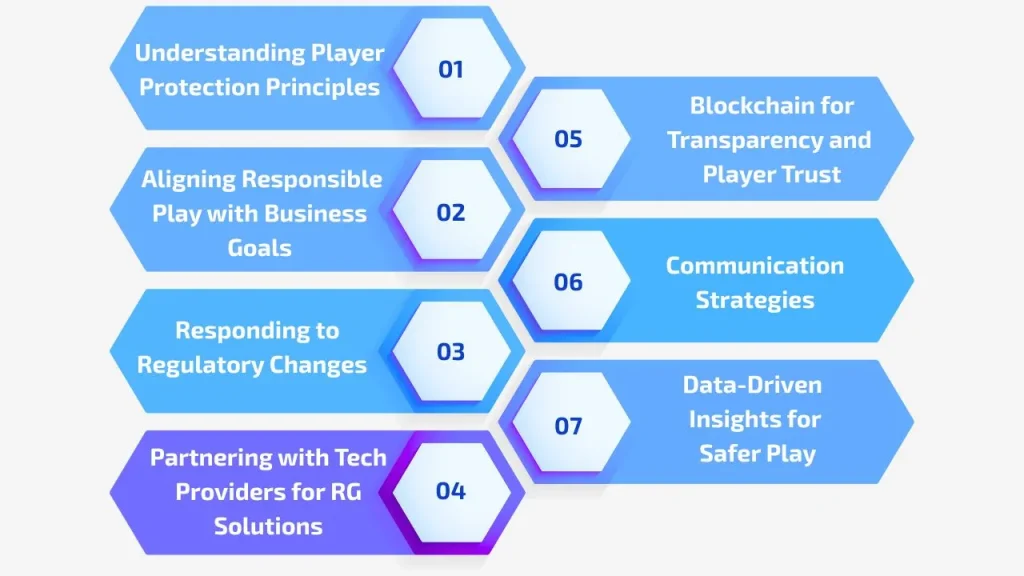
- Understanding Player Protection Principles
- Aligning Responsible Play with Business Goals
- Responding to Regulatory Changes
- Partnering with Tech Providers for RG Solutions
- Blockchain for Transparency and Player Trust
- Communication Strategies: Promoting Awareness
- Data-Driven Insights for Safer Play
Understanding Player Protection Principles
The primary goal of player protection is to reduce the impact of gambling-related risk, which includes financial losses, addiction, emotional distress, and other psychological disorders. By emphasising player protection, it showcases operators’ willingness to practise responsible gambling and prioritise consumer welfare over profit. The fundamental aspect of player protection that constitutes a safe and ethical engagement.
-
Transparency and Fairness:
Players should have clear access to game rules, payout structures, odds, and other relevant information. This helps them make informed decisions.
-
Self-Control Tools:
Gambling tools, such as deposit limits, timeouts, reality checks, and self-exclusion, can enable players to have more control of their gambling behaviour.
-
Prevent Underage Gambling:
Age verification systems, identity checks, and parental control measures ensure only eligible users can gain access to gambling.
-
Data Privacy and Security:
Operators must incorporate robust data encryption, transparent data policies, and comply with privacy laws that are critical for players' trust.
-
Detection and Intervention:
By tracking user activity with the help of AI-driven analytics and real-time monitoring, the casino owners can flag consumers' suspicious betting behaviour, erratic spending, or long play sessions.
We have now seen how responsible gambling practices have greatly benefited the players.
What do online casino software development companies gain from responsible gambling practices?
Aligning Responsible Play with Business Goals
By integrating responsible play into their core operations, casinos can help adopt a sustainable model that is both profitable and secure. Gambling software development must view responsible gambling practices as more than a compliance requirement; they should utilise them as a value-driven strategy that enhances trust, loyalty, and long-term growth. The following are the key benefits of responsible play:
-
Brand Trust and Reputation:
This feature builds credibility, as players prefer to engage with casino platforms that prioritise their well-being.
-
Regulatory Stability:
Aligning business practices with responsible gambling standards negates compliance risks, including fines, suspensions, or license suspensions.
-
Sustainable Player Lifetime Value (LTV):
Casino businesses should know that advocating for balanced play can lead to long-term engagement rather than excessive spending that can result in burnout or exclusion.
-
Stakeholders Confidence:
Stakeholders have mostly preferred operators who strictly adhere to compliance and ethical practices.
Another key aspect of responsible gambling is how online casino providers respond to regulatory changes.
Responding to Regulatory Changes

- Local and international gambling regulation that covers the UKGC, MGA, and Curacao, or US state-level laws)
- Advertising and marketing restrictions
- Anti-money laundering (AML)and Know Your Customer(KYC) standards
- Data protection requirements such as GDPR and AI governance laws
- Responsible gambling mandates, including player protection tools and reporting obligations
Partnering with Tech Providers for RG Solutions
Modern platforms are leveraging technological applications, including behavioural analytics, AI, machine learning, self-exclusion APIs, real-time notifications, and identity verification and KYC automation, to be highly effective in promoting responsible gambling. Owning these responsible gambling tools is very expensive. So partnering with technology providers is a cost-effective strategy.
-
Access Expertise and Innovation:
They develop cutting-edge tools to ensure robust compliance and player protection.
-
Ensuring Regulatory Compliance:
Many providers design solutions tailored to specific jurisdictions, such as the UKGC, MGA, or Ontario's iGaming regulations.
-
Integrate Seamlessly:
APIs and plug-and-play systems make it easier to integrate RG features into exciting platforms, without hindering other functionalities.
-
Improved Data Accuracy:
Reliable tracking, reporting, and analytics systems enable a smooth regulatory process.
-
Scale Efficiency:
As player base and jurisdiction gain momentum, third-party systems would be able to adapt quickly.
Operators need to establish the right partnerships to enhance the customer experience, along with a technical backbone for responsible gambling.
Moving forward, let’s explore how blockchain technology in online casino software development enhances transparency and fosters player trust, ultimately contributing to responsible gambling.
Looking for Gambling Software Development?
Blockchain for Transparency and Player Trust
The specific functions of blockchain technology in online casinos are mentioned below.
-
Provably Fair Gaming:
This ensures that outcomes are random and the game results cannot be tampered with by anyone.
-
Immutable Transaction Records:
All bets, deposits, and withdrawals have been recorded, and data is encrypted, preventing disputes over data and manipulation.
-
Open Auditing:
Regulators and auditors regularly check transparent ledgers in real-time, minimising the need for manual reporting and their party validation.
-
Smart Contracts for Automation:
It eliminates bias and delay by automating payouts, bonuses, and player limits.
Overall, blockchain makes the operations visible and verifiable, creating a culture for accountability that aligns well with online gambling principles.
Communication Strategies: Promoting Awareness
For this, the online casino business needs to create an environment where players are kept informed and empowered to make conscious decisions. It also depends on how creatively operators communicate their responsible gambling messages.The key objectives of a responsible gambling communication plan are to educate, empower, engage, encourage dialogue, and reinforce brand trust.
-
Website and App Interfaces:
1. RG icons, links to help pages, and quick access to limit-setting tools are clearly visible.
2. Showcase educational banners during gameplay with appearing text such as “Take a Break” or “Know Your Limit. -
Email and Push Notification:
1. Sending personalised reminders or updates about the deposit limits, time-outs, or available support services.
2. Restrict promotional messages that show signs of risky behaviour. -
Social Media and Content Marketing:
1. Sharing awareness campaigns, player testimonials and infographics on healthy gaming habits on platforms like Instagram, Twitter, and Linkedin
2. Advocate responsible gambling as part of brand identity, not an obligation. -
Customer Support Channels:
1. Train the support team to mention RG tools during conversations, especially when user activity raises concerns.
2. Language should be clear and conversational, and accessible to all players. -
In-Game Messaging:
1. Friendly pop-ups rather than alarming warnings resonate well with consumers.
2. Messages should be positive and supportive, reinforcing that gambling is to be seen as entertainment and not a source of income.

Data-Driven Insights for Safer Play
In the technological era of iGaming, data is the cornerstone of responsible gambling. Every activity a user performs on the platform, including clicks, deposits, and sessions, provides valuable information. This information is used to identify risky patterns, predict problem behaviour, and design personalised interventions.
Apart from leveraging business intelligence, online casino operators should utilise player data in building a safer, more sustainable gaming environment.
To get a better understanding, let’s evaluate the role of data in responsible gambling.
- The systems help detect early warning signs of excessive play.
- Customised interventions can take the form of gentle reminders or deposit limit prompts.
- Game design needs to be improvised to minimise addictive patterns.
- It becomes extremely critical in measuring the real-world impact of responsible gambling.
By adhering to the above guidelines and measures, gambling software for operators will be able to successfully promote responsible gambling to their customers.
What are the future trends in responsible gambling?
As the ready to launch iGaming platform landscape is constantly evolving in a digital world, with changes occurring in global regulatory standards. Therefore, operators need to stay informed about the future trends in responsible gambling.
Future Trends in Responsible Gambling
1. Artificial Intelligence (AI) and Machine Learning Predictive Protection:
- AI algorithms analyse player data on session length, spending, and betting patterns, as well as emotion cues in chats.
- Machine learning can identify subtle behavioural changes in users
- Once risky behaviour is identified, it automates personalised messages or restrictions.
2. Gamified Responsible Gambling Tools :
- Progress trackers showing time well played or balanced gaming streaks.
- Rewarding players in the form of achievement badges for maintaining healthy gambling behaviour.
- Personal challenges encourage users to follow responsible gambling habits.
3. Blockchain Support:
- It is set to define trust and accountability in online gambling
- Decentralised tamper-proof ledgers that keep transactions, game outcomes, and data handling fully transparent.
- A trust-based regulation allowing users to feel safer and more in control of their digital experiences.
4. Behavioural Analytics:
- Structuring reminders, limits, and offers based on user risk profiles.
- Modifying communication tone and frequency to match player preferences.
- Effective use of contextual triggers.
5. Responsible Marketing :
Casino operators will prefer to use AI-based ad monitoring systems for the following purposes.
- To ensure promotion doesn’t target vulnerable demographics.
- Bonus or risk-free claims are presented transparently.
- Making messaging advocating for responsible gambling is visible in all campaigns.
Conclusion
To minimise the risk in gambling and to protect vulnerable participants, regulatory bodies and legal authorities have come up with an initiative to implement laws that foster responsible gambling habits. It didn’t take much time for operators to realise that promoting responsible gambling has utility value beyond compliance.
The gambling software providers can also utilise this as a marketing tactic to advertise themselves as an ethical brand among their target audience. By staying more vigilant and compliant with the law, operators can unlock a huge growth potential. The following guidelines in this blog can help them achieve this.
FAQs
- What is responsible gambling?
It refers to the set of policies and practices that help players gain more control of their gambling behaviour. This includes self-exclusion programs, deposit limits, and educational resources.
- How can casinos promote responsible gambling?
The casinos can promote responsible gambling by incorporating effective communication strategies. The popular means would be in-game messaging and a customer support channel.
- How does AI help with responsible gambling?
The data and insights collected from players can give early cues to operators on problem gambling.
- What is the meaning of problem gambling?
It is a gambling addiction that can cause some serious consequences for a person's overall well-being.
- Why is social responsibility important for gambling operators?
It helps operators gain trust of their customers, regulators, and wider audience by ensuring a safe and transparent gaming environment.